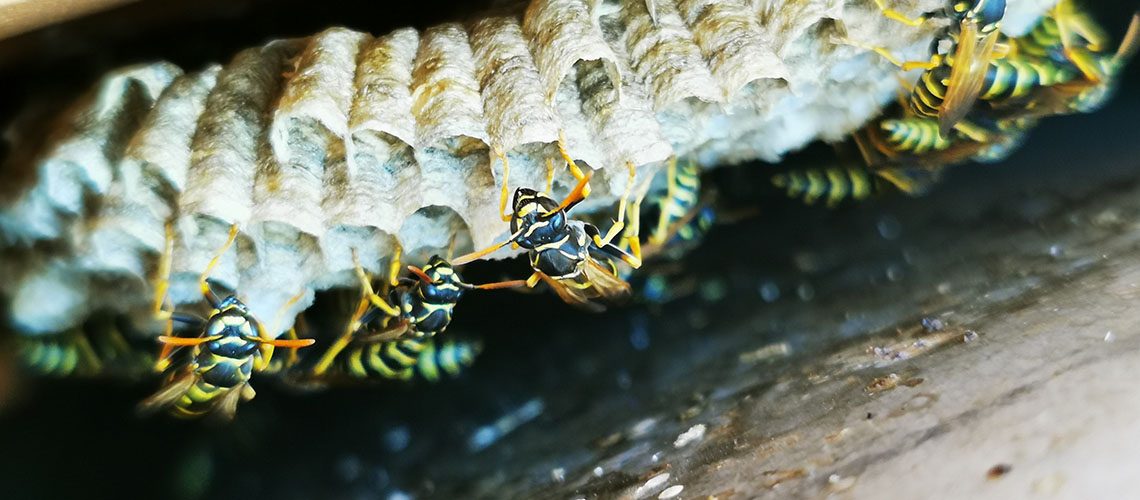
Enjoying a relaxed weekend on your patio or watching your children play in the backyard are central parts of the coastal Gold Coast lifestyle. However, as the weather warms across South East Queensland, aggressive paper wasps and European wasps quickly transform eaves, window frames, and garden pergolas into hazardous nesting sites. A single wasp nest around your entertaining area creates an immediate safety risk for your family and pets. Rather than waiting for a dangerous swarm to force you indoors, taking proactive measures around your property perimeter can stop wasps from establishing nests before they ever become a threat.
Why Wasps Target Gold Coast Residential Properties
Understanding what attracts fertilised queens to your specific block is the key to breaking their nesting cycle. During spring and summer, queen wasps actively seek out three vital resources:
- Sheltered Structural Overhangs: Roof eaves, fence capping, shade-cloth frameworks, and the undersides of raised timber decks offer perfect protection against harsh subtropical downpours and midday heat.
- Unprotected Timber Sources: Wasps chew raw, untreated timber from garden fences, outdoor furniture, and unsealed decking to mix with saliva, creating the paper-mache pulp used to build their honeycomb chambers.
- Abundant Water & Food Sources: Open swimming pools, leaking garden taps, outdoor pet bowls, and active gardens filled with caterpillars or sweet fallen fruit act as natural magnets for foraging workers.
Proactive Prevention Checklist for Homeowners
By making a few strategic adjustments around your yard, you can make your home significantly less attractive to nest-building queens:
- Seal Timber Surfaces: Coat raw garden timber, boundary fencing, and outdoor furniture with paint, stain, or varnish. Sealing the grain prevents paper wasps from scraping wood fibers to construct their nests.
- Eliminate Perimeter Moisture Hazards: Fix dripping hose connections, empty standing water in garden saucers, and keep outdoor pet bowls clean. Reducing accessible water sources forces queen wasps to search elsewhere for harborage.
- Install Mesh Over Wall Weep Holes & Voids: European wasps frequently build nests inside internal wall cavities, entering through open brick weep holes or fascia gaps. Fitting fine stainless steel weep holes covers block entry without restricting essential building ventilation.
- Manage Outdoor Waste & Food Sources: Ensure outdoor bins have tight-fitting lids and immediately clear fallen fruit from backyard fruit trees. Sweet residues and meat scraps provide rich nourishment for foraging colonies.
- Inspect Overhangs Early in the Season: During early spring, regularly check sheltered window frames, sub-floor joins, and eaves for small, golf-ball-sized starter nests. Identifying and addressing activity early prevents large, territorial summer swarms from forming.
Protect Your Backyard Oasis Today
Don’t let aggressive wasp swarms or hidden structural pests compromise your family’s comfort or safety. Experience the superior care, thoroughness, and honest value of the Gold Coast’s trusted owner-operator.
Ready to secure your property for the season? Call Damian directly or request a free quote online today!
